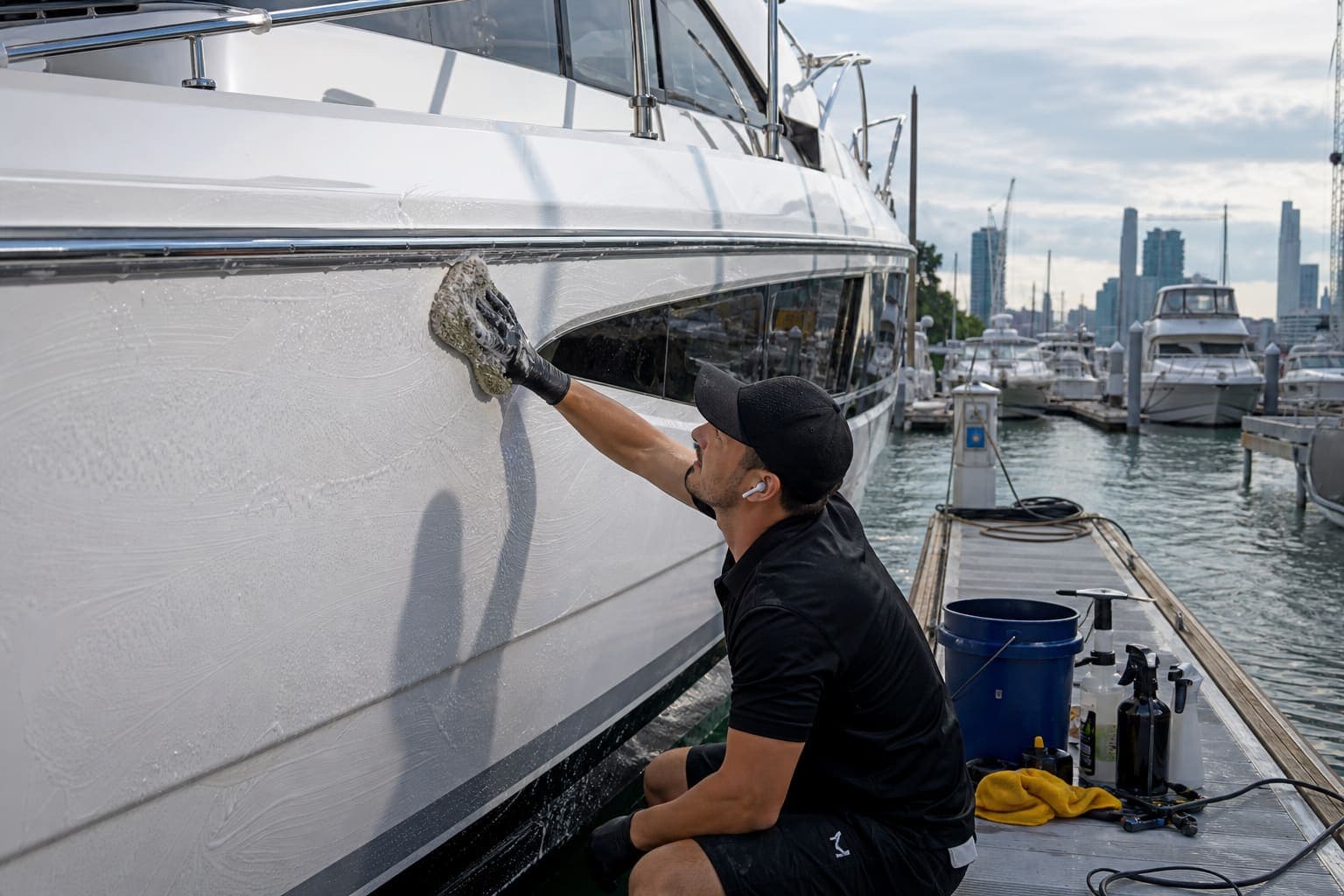
What Chicago Boat Detailing Services Include
A basic boat wash and wax typically covers the hull exterior, topsides, and basic cockpit cleaning. This is appropriate for boats that are otherwise well-maintained and just need regular upkeep between more thorough details.
A full detail service goes further: compound polishing to remove oxidation and minor scratches from the gelcoat, cleaning and conditioning of vinyl upholstery, detailed cleaning of the cockpit and interior, metal polishing, glass cleaning, and application of wax or sealant. A full detail significantly improves the appearance of a boat that's been on the water through a full season.
Mobile detailing — where the detailer comes to your slip or marina — is the standard delivery model for Chicago boat detailing. Confirm that your marina permits outside service providers before scheduling; some harbors require proof of insurance from contractors.
When to Detail Your Chicago Boat
Spring commissioning detail: the ideal time for a comprehensive full detail is at the start of the season, after the boat comes out of winter storage and before you begin using it. This addresses any oxidation or staining that developed over winter, protects the hull and gelcoat, and gives you a fresh start for the season.
Mid-season maintenance: a wash and wax every 4–6 weeks during the boating season keeps Lake Michigan mineral deposits from etching into the gelcoat and maintains the appearance of your boat for guests.
Pre-sale detailing: if you're planning to sell your boat, a professional full detail is one of the best ROI investments you can make. A well-detailed boat photographs better and presents more favorably to buyers than one showing a season of grime.
Lake Michigan's Specific Effect on Your Boat's Surfaces
Lake Michigan water has a notably high mineral content — primarily calcium and magnesium carbonates — that deposits on boat surfaces as white chalky spots when water dries. These mineral deposits etch into gelcoat and glass surfaces if left untreated, and they're significantly more aggressive than deposits from soft-water inland lakes. Chicago boats need more frequent washing and treatment for mineral deposits than boats in many other freshwater environments.
The UV environment on Lake Michigan in summer is intense. The lake acts as a reflector, bouncing UV upward onto surfaces that shore-based equipment isn't exposed to — the underside of deck hardware, the inside of cockpit walls, and areas of the hull that receive reflected light all experience UV degradation that surprises owners coming from land-based vehicle ownership.
Bird activity at Chicago's harbors — particularly cormorants, ring-billed gulls, and Canada geese — creates an above-average bird dropping problem at lakefront marinas. Bird droppings are highly acidic and can etch gelcoat within hours in warm weather. A regular washing schedule that removes droppings before they can cure is more effective than any sealant or coating as protection against this specific and persistent threat.
Protecting Your Investment: Products and Schedules That Work
A systematic boat care schedule tuned to Chicago's conditions prevents most cosmetic deterioration before it starts. For a boat used regularly through the season, a marine wash-and-wax every 4–6 weeks maintains the protective layer that buffers the gelcoat against UV and mineral deposits. When the wax layer degrades — visible as water no longer beading on the surface — it's time for a fresh application before damage accumulates.
Ceramic coatings for marine surfaces have become increasingly popular among Chicago boat owners who want a more durable protective layer than traditional wax. A ceramic coating properly applied by an experienced marine detailer can last 1–3 seasons and provides superior water-beading, UV resistance, and mineral deposit resistance compared to wax. The upfront cost is higher but the reduced maintenance frequency over subsequent seasons often makes the economics favorable.
Interior care for Chicago boats should address vinyl upholstery with a dedicated marine vinyl protectant after every cleaning — Lake Michigan UV aging on unprotected vinyl produces cracking and fading within 2–3 seasons. Teak surfaces need either regular oiling or a protective coating to maintain their appearance. Stainless steel fittings should be polished annually and inspected for crevice corrosion at every opportunity.
Working with Mobile Detailers at Chicago Harbors
Mobile boat detailing is the standard delivery model in Chicago — detailers come to your slip rather than requiring you to transport the boat to a facility. This convenience comes with the practical requirement that your marina permits outside service vendors. Most Chicago Harbors facilities allow approved contractors; some require the detailer to provide proof of insurance and register with the harbor office before accessing the docks.
Scheduling a detailer at peak season (July and August) requires lead time — the best mobile detailers in Chicago's marina circuit are booked weeks out during the heart of the season. Booking your spring detail in February or March secures a timely commissioning appointment; booking your fall detail in late August ensures you don't miss the pre-storage window. Reactive scheduling works in the off-season but rarely in peak summer.
Get a detailed scope of work in writing before any significant detailing service. For a spring full detail or a compound-and-polish restoration job, the service should specify which surfaces are included, what products are being used, and what condition the gelcoat is expected to be in at completion. This prevents misunderstandings about what 'full detail' means and gives you a basis for evaluating the work when complete.
Teak Care and Special Surface Considerations on Chicago Boats
Teak decking and trim are beautiful but require specific maintenance in Lake Michigan's mineral-rich water and intense summer UV environment. Untreated teak oxidizes quickly in direct sun, turning silver-gray and eventually cracking. Teak oil or a penetrating marine sealer, applied early in the season and reapplied as needed, maintains the wood's natural appearance and provides UV and water resistance. Heavily oxidized teak can be restored with teak brightener and gentle scrubbing before re-treatment.
Non-skid deck surfaces on Chicago boats accumulate ground-in dirt and mineral deposits that require specific attention during a full detail. A dedicated non-skid cleaner and brush treatment — not just a surface rinse — lifts embedded material from the textured surface. This both restores the appearance and maintains the surface's original slip resistance, which is a genuine safety function rather than just a cosmetic one.