Types of Boat Storage in Chicago
Outdoor rack or yard storage is the most common and typically most affordable option in the Chicago area. Boats are pulled from the water, placed on stands or trailers, and stored in a secured outdoor lot. This is appropriate for fiberglass and aluminum boats that can tolerate Chicago's winter temperatures with proper winterization.
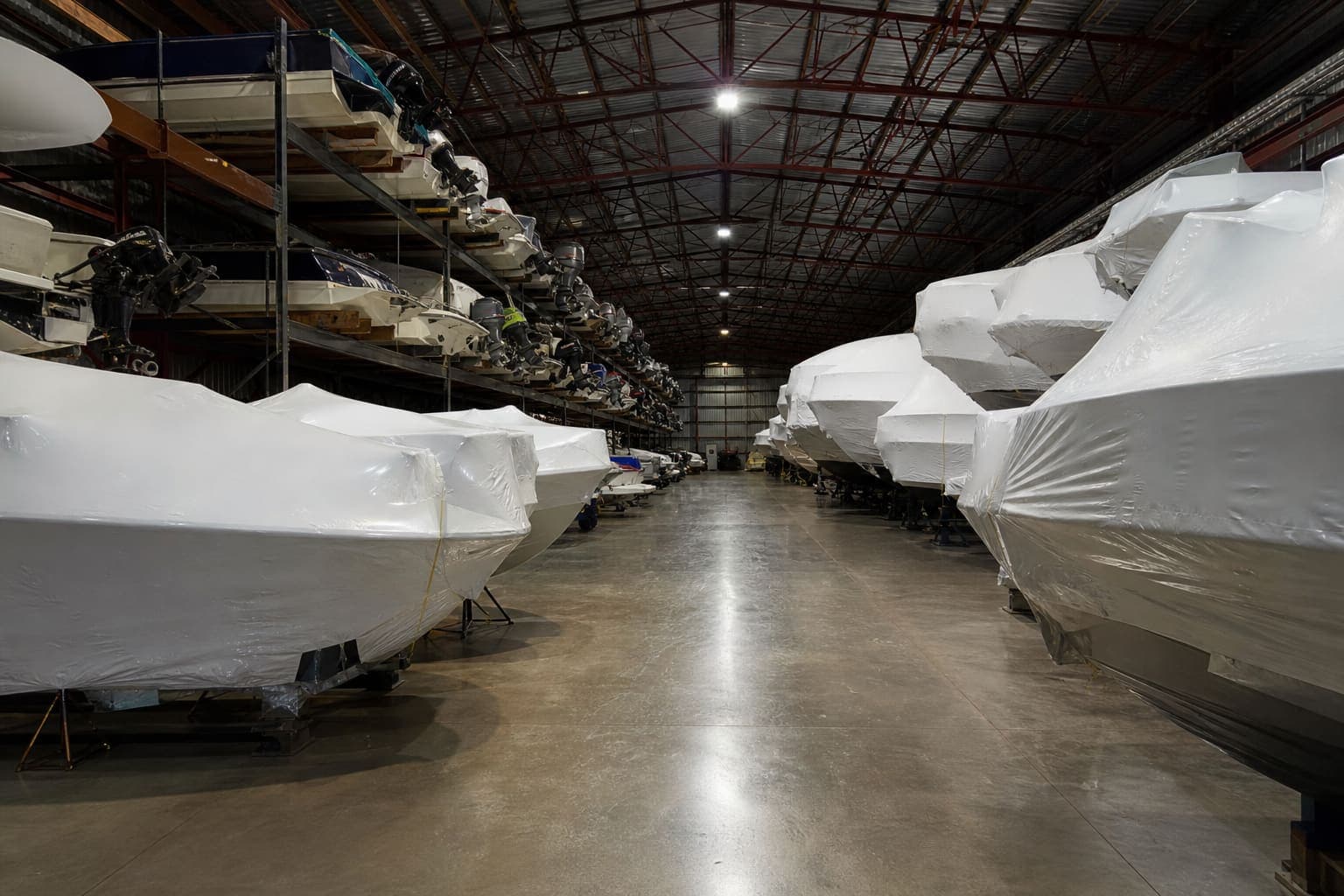
Indoor storage protects against UV, ice loading, and vandalism and is considered the premium option for higher-value vessels. Indoor facilities in the Chicago area are limited and fill up early — if you want indoor storage, contact facilities in August or September to reserve space before the fall haul-out season.
Shrink wrap is applied over the boat to create a weatherproof cocoon for the winter season. Most storage facilities offer shrink wrapping as a service; some boat owners prefer to do it themselves. Professional shrink wrap service includes framing to support the plastic and prevent pooling.
In-water winter storage is sometimes available at facilities with breakwaters strong enough to protect vessels from ice loading. This is more common in southern Lake Michigan ports and is relatively uncommon in Chicago proper due to the severity of winter ice conditions.
Winterization: What It Includes
Proper winterization involves protecting the engine from freeze damage, treating the fuel system, protecting electrical components, and securing the hull and deck. For most inboard and outboard engines, winterization includes fogging the cylinders with oil, flushing the cooling system with antifreeze, and treating the fuel with stabilizer to prevent degradation over winter.
Battery maintenance is critical. Either remove the battery and store it indoors on a trickle charger, or disconnect it and check periodically. A dead battery left in freezing temperatures can fail permanently.
Canvas, upholstery, and electronics should be addressed before winter. Remove electronics where possible, treat upholstery with a protective product, and ensure canvas is cleaned and stored properly to prevent mold.
Choosing a Chicago Boat Storage Facility
The key factors: security (fencing, cameras, limited access), convenience (distance from your home and launch marina), pricing (by linear foot or per-boat flat rate), and services offered (haul-out, blocking, winterization, shrink wrap). Ask whether the facility can coordinate with a local marine service for winterization if you can't be present.
Reserve early. Chicago-area boat storage fills by late September. Boaters who wait until their haul-out date to call around typically find limited options or pay premium late-booking rates.
Spring Commission Checklist: Getting Back on the Water
Spring commissioning in Chicago typically begins in late April, with most boats launching in May. The de-winterization process is the mirror image of winterization — start with a thorough inspection of the hull, checking for cracks, crazing, or blistering that developed over the winter storage period. Problems caught at commissioning are far less expensive to address than failures discovered mid-season.
Engine systems require specific attention after sitting for 5–6 months. Change the engine oil and filter, inspect all impellers (raw water cooling impellers degrade in storage and should be replaced every 1–2 seasons), check belts and hoses for cracks, reconnect and test battery charge, and run the engine in a test setup before returning to the harbor. The cost of pre-season engine service is a fraction of in-season emergency repair.
Electronics often need attention after winter storage. Reconnect all navigation electronics, update chart plotter software if applicable, test VHF radio communication, and verify all running lights. Replacing depleted backup batteries in handheld devices is a simple step that many boaters forget until they actually need the device. Building a spring commissioning checklist specific to your boat's systems ensures nothing is missed in the excitement of getting the season started.
Long-Term Care Between Seasons: What Matters Most
Proper winter storage extends a boat's service life meaningfully. Fiberglass hulls that are properly winterized, stored with appropriate blocking, and protected from UV and precipitation degrade far more slowly than those stored carelessly. A well-maintained Chicago-area boat can provide excellent service for 20–30 years; poorly stored boats show significant age in 10. The investment in quality storage and winterization pays dividends in resale value as much as in operational reliability.
Bilge moisture management is a year-round concern. In storage, moisture entering the bilge through deck hardware, through-hulls, or condensation can cause mold, corrosion, and wood rot in older boats. Solar-powered ventilation fans keep air moving in the bilge during storage; desiccant products placed in enclosed spaces like the cabin absorb moisture that would otherwise damage upholstery and electronics over the winter months.
Documentation and record-keeping for Chicago boaters is worth establishing as a habit. Maintaining a log of annual service, repairs, and storage conditions creates a valuable history for future owners and helps you track maintenance schedules. Records of winterization, haul-out dates, and service work also support warranty claims on newer engines and equipment where service history documentation is required by the warranty terms.
Insurance and Liability Considerations for Chicago Boat Storage
Chicago boat owners should review their marine insurance policy before choosing a winter storage facility. Most policies require the vessel to be stored at a facility with specific security standards or with a named storage facility listed on the policy. Moving your boat to a new storage location without updating your policy can create coverage gaps that only become apparent after a claim.
Storage facility contracts typically limit the facility's liability for damage that occurs during storage — they're generally not responsible for weather damage to a properly stored vessel, vandalism, or theft if the facility meets basic security standards. Understanding what the facility's liability covers and what your marine insurance must cover gives you a complete picture of your risk exposure during the winter storage period.